
Editorial: Value-based healthcare in the UK
Value-based healthcare (VBHC) is not a new concept in many healthcare systems but is becoming increasingly more important due to financial pressures, advanced care, greater patient expectations, and ongoing economic uncertainties. VBHC is the relationship between the best possible patient outcome and the cost of the care. This has historically always been a key goal of the UK National Health Service (NHS) however, due to budget constraints and an increased public expectation for the best available care, there is now a real drive towards putting VBHC into practice.
The Healthcare Costing for Value Institute (run by the Healthcare Financial Management Association) is one example of a platform that has been created to support NHS providers and commissioners exchange ideas about how to practically deliver VBHC. NHS organisations can join the Institute and have access to training and resources. The Institute collaborates with other organizations which also promote VBHC within healthcare settings, including the Karolinska University Hospital in Sweden. Sweden is perhaps the best example of a healthcare system which is aligned with the infrastructure necessary for implementing VBHC (discussed in our last Editorial: Value-based healthcare in Sweden) and it is encouraging to see that the UK recognises this and is learning from this system. When alignment with VBHC was assessed in 25 countries, the UK and Sweden came out as scoring highly, with similar scores on each of the domains measured (Figure 1).
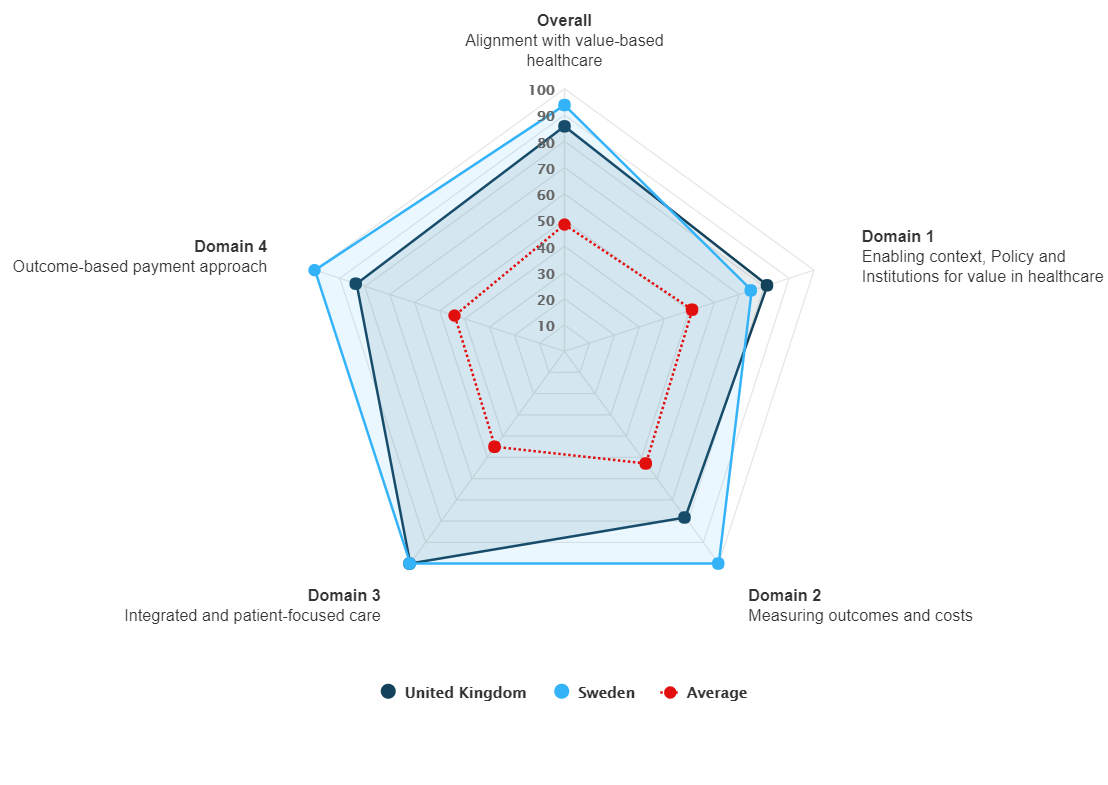
Figure 1. Country comparison of alignment with VBHC. The average score was based on all 25 countries assessed.
Source: The Economist Intelligence Unit, VBHC Global Assessment Link
In addition to providing a platform, the HFMA ran a pilot which aimed to test how easy it was to practically link costs and outcomes at the patient level. This highlighted several barriers and challenges to adoption of VBHC in three different NHS trusts which will now be used as the basis for discussions at a national level. The HFMA hopes to interact with NICE, NHS England, NHS Digital, NHS Improvement, and Royal Colleges to achieve VBHC implementation across the NHS.
In terms of data collection, numerous disease registries are established, but collection of longitudinal patient outcomes data is limited to only a few procedures. The UK National Joint Registry, for example, collects data on all hip, knee and ankle replacements and tracks patient outcomes post-surgery. Similarly, the National Cancer Registration and Analysis Service merges data from eight cancer registries in England in order to perform analysis from 1990 onwards. In 2009, NHS England introduced Patient Reported Outcomes Measures, which assess the quality of care delivered from the patient perspective for four procedures at all NHS-funded providers. Much of the progress in data collection has been in the acute care setting, with data collection in general practice, mental and community health lagging slightly behind.