
Editorial: Value-based healthcare in the Netherlands
Costs in healthcare are growing due to an increasing older population, chronic diseases and an expanding medical innovation market. Governments struggle to cover healthcare expenses and are looking for new ways to stretch their budget, one of them being Value-based Healthcare (VBHC). VBHC links the clinical outcomes to the costs, where the value is the relevant clinical outcomes divided by the costs. The Netherlands has slowly started to implement this approach since parliament urged the government for outcome-based payments in healthcare.
The healthcare system in the Netherlands consists of three players; the health authorities, the insurance companies, and care providers. Health insurance is mandatory and the government reimburses healthcare via insurance companies, covering the care included in the basic healthcare package. Through the decentralized system there are possibilities for innovation at a local level with some VBHC initiatives, in which insurance companies and care providers have showed interest. Two examples of such initiatives are outcomes-based payments for Parkinson’s disease and VBHC for diabetes.
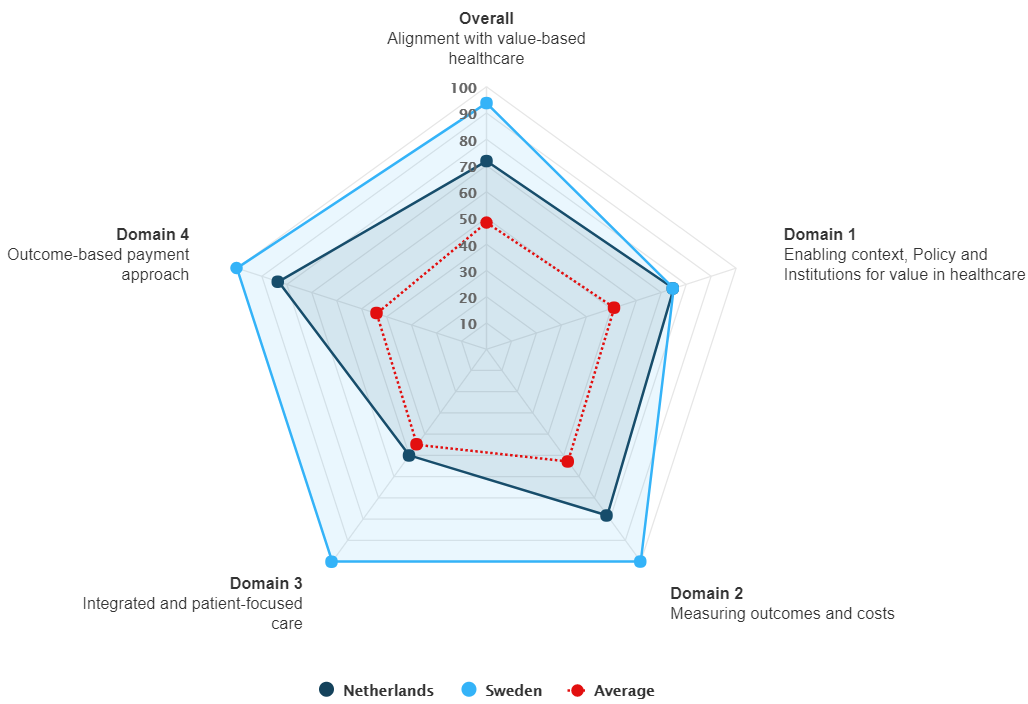
Figure 1. Country comparison of alignment with VBHC. The average score was based on all 25 countries assessed.
Source: The Economist Intelligence Unit, VBHC Global Assessment Link
To improve care for patients with Parkinson’s disease, the hospital Radbound UMC, the clinic network ParkinsonNet C&I Centre and the regional clinic ParkinsonNet in Nijmegen, as well as two insurance companies, joined forces to develop a new payment model. The aim is that local networks will be reimbursed by integrated budgets from the two insurance companies, based on the expected costs of care in the region and the outcomes. The outcomes will be measured though validated indicators. The parties involved in this initiative expect that outcome-based payments will be an incentive for efficiency whilst controlling costs.
VBHC for Diabetes is an initiative by Diabeter, a Dutch clinical network specialized in diabetes care for children and young adults with Type 1 diabetes. Compared to the Dutch average, Diabeter patients have shown better clinical outcomes which has decreased the costs of care. Diabeter Patients are risk stratified via baseline characteristics through an electronic database. This stratification allows Diabeter to match the best care protocol to each patient based on the underlying etiology of their diabetes. In addition, it enables the management of comorbidities or other associated conditions. Quality of Life (QoL) data is systematically collected to understand the impact of care on the outcome. The outcome data includes the achieved health status, care processes and complications, and sustainability of health. The cost per patient is regularly investigated and has been stable over the years. Earlier in 2017, Diabeter was awarded with the Value-Based Healthcare prize by the Harvard professor Michael E. Porter.