
Editorial: Value-based healthcare in Germany
Value-based healthcare (VBHC) measures the value of care as health outcome for the patient divided by the cost of care. Due to financial pressures, VBHC is being increasingly recognized as a potential way to reimburse providers depending on the outcome of the care. A study by the Economist Intelligence Unit assessed the VBHC environment in 25 countries. The alignment of the German healthcare system with key components of VBHC differs vastly across the four methodological domains measured.
In one respect, Germany’s bundled payment system and implemented mechanisms to identify less effective treatments make it score very high on the outcome-based payment approach domain. It also scores highly on having an enabling context, policy, and institutions for value in healthcare, with only a lack of training in VBHC preventing a higher score. However, only moderate efforts have been made to measure outcomes and costs. National registries exist but accessibility is limited and often the data cannot be linked between registries. Patient-focused care is identified as a major weakness mainly due to the strict separation between in- and outpatient care. Integrated care contracts do exist however their overall contribution to the German healthcare system is low.
Figure 1 below shows that other countries, like Sweden, are overall more aligned with VBHC than Germany.
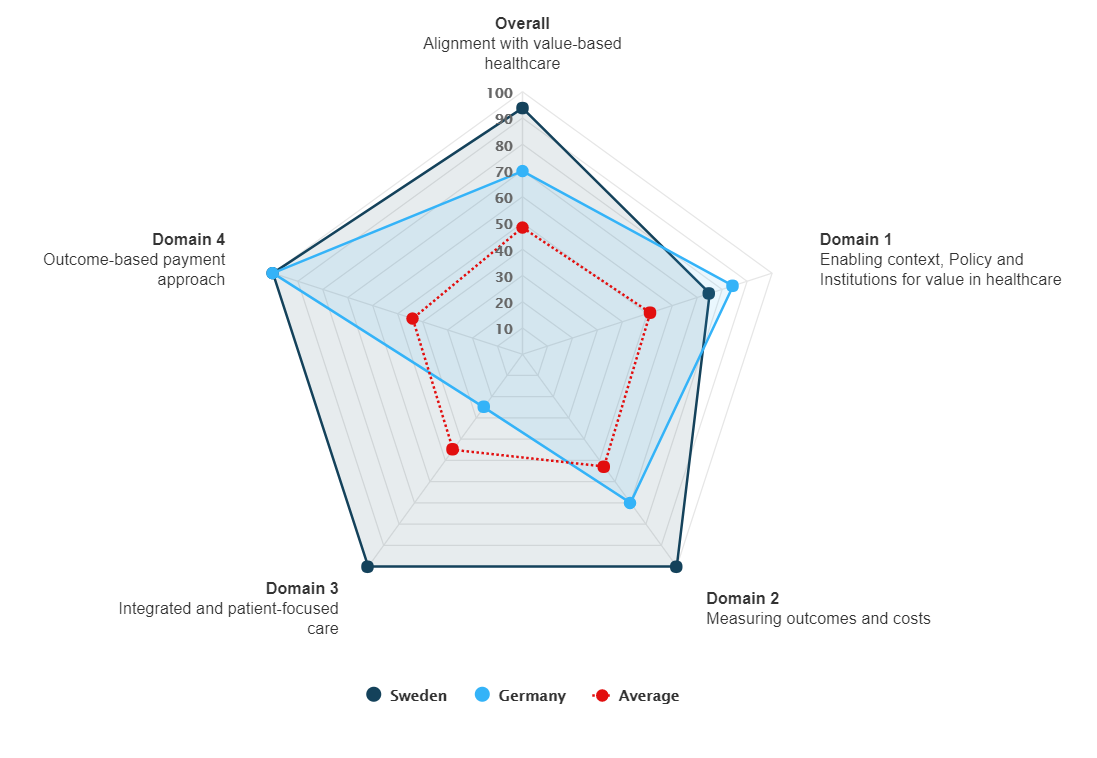
Figure 1 Country comparison of alignment with VBHC. The average score (red) was based on all 25 countries assessed.
Source: The Economist Intelligence Unit, VBHC Global Assessment
With the Gesundes Kinzigtal GmbH, a network of various physicians and a healthcare management company, have already implemented an integrated care approach to VBHC in the south-west of Germany. The pilot programme organizes value-based integrated care for more than 30,000 people in the region without additional costs for the patient. Both the costs and patient outcomes are analysed on a regular basis throughout the programme and based on the results the programme is adjusted to optimize care and reduce costs. It was initiated in 2005 and the data so far is promising, with cost savings of 16.9% compared to another region’s population within the same health insurance. Even though the applicability to other regions or the country remains unclear, it is promising that the first major attempt to VBHC in Germany seems to be a success.